
Nature Photography: The Majestic Great Blue Heron at Buckeye Lake
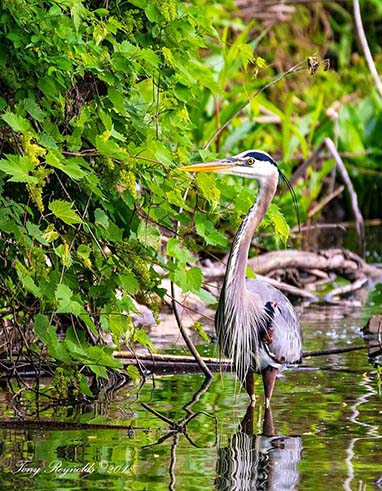
There’s something truly magical about nature photography when photographing wildlife in their natural habitat. Few subjects are as rewarding for beginning bird photographers as the great blue heron. During my recent visit to Buckeye Lake, I had the privilege of spending time with these magnificent creatures, and I’d like to share some insights about photographing this spectacular species.
Why Great Blue Herons Make Perfect Subjects for Beginning Wildlife Photographers
If you’re just starting your journey into bird photography, the great blue heron is an ideal subject to cut your teeth on. Unlike many smaller, more skittish birds that dart away at the first sign of movement, great blue herons are surprisingly tolerant of photographers when approached respectfully. Their large size – standing up to 4.5 feet tall with a wingspan reaching over 6 feet – makes them much easier to spot and track through your viewfinder than smaller songbirds.
Perhaps most importantly for photographers, herons move with deliberate, measured motions. They’re patient hunters, often standing motionless for extended periods as they scan the water for fish, frogs, and other aquatic prey. This gives you ample time to adjust your camera settings, compose your shots, and capture multiple frames without the frantic pace often required when photographing more active species.
My Setup: Canon 7D Mark II with Sigma 150-600mm
For this shoot, I relied on my Canon 7D Mark II paired with the Sigma 150-600mm f/5-6.3 lens – a combination that proved perfect for heron photography. The 7D Mark II’s crop sensor effectively extends the reach of the lens, giving me an equivalent focal length of 240-960mm, which allowed me to maintain a respectful distance while still filling the frame with my subject.
The Sigma 150-600mm lens, while variable aperture, performed admirably throughout the zoom range. At 600mm, the f/6.3 maximum aperture required careful attention to shutter speed. I typically shot at ISO 800 to maintain shutter speeds of at least 1/1200th of a second, ensuring sharp images even when the heron made sudden movements. I also use a Neewer Gimbal tripod head to track my subjects.
Blue Heron Feather Detail
What truly sets great blue herons apart as photographic subjects is their stunning plumage. These birds showcase an incredible layering of feathers that creates beautiful texture and visual interest. Their necks display elegant striping patterns in blues, grays, and whites, while their wings feature intricate feather details that catch light beautifully.
The key to capturing this feather detail is understanding light and timing. Early morning and late afternoon provide the warm, angled light that brings out the subtle color variations and textures in the heron’s plumage. Side lighting works particularly well, creating gentle shadows between the feather layers that add depth and dimension to your images.
Buckeye Lake: An Ideal Location
Buckeye Lake offers excellent opportunities for heron photography, with its shallow areas and abundant fish population attracting these birds year-round. The lake’s accessible shoreline provides multiple vantage points, allowing photographers to position themselves based on lighting conditions and bird behavior
During my visit, I found the herons most active during the golden hours, though they remained present throughout the day. The key was patience – sometimes waiting 20-30 minutes in one spot paid off when a heron would venture close enough for intimate portraits.
Conclusion
Photographing great blue herons at Buckeye Lake reminded me why I fell in love with wildlife photography in the first place. These elegant birds offer the perfect combination of accessibility and beauty, making them ideal subjects for photographers at any skill level. Their patient hunting style gives you time to perfect your technique, while their stunning plumage rewards careful attention to light and composition.
Whether you’re a seasoned photographer or just starting your wildlife photography journey, I highly recommend spending time with these magnificent birds.


Other Photography Posts